



Photography by John D’Angelo
As a first-generation Sicilian, when I first heard about local chef/restaurateur Anthony Lombardo’s new restaurant, Medusa Cucina Siciliana in Midtown Detroit, I was beyond excited for the possibilities. What foods would be served? What would the space look like?
Sicily, an autonomous region of Italy, and the largest island in the Mediterranean, has a rich and complex history shaped by various rulers — from the Romans to the Greeks to the Moors, the Normans, and many others — with each having left a lasting influence on the region’s food, architecture, and culture. Would this history be conveyed in the design?
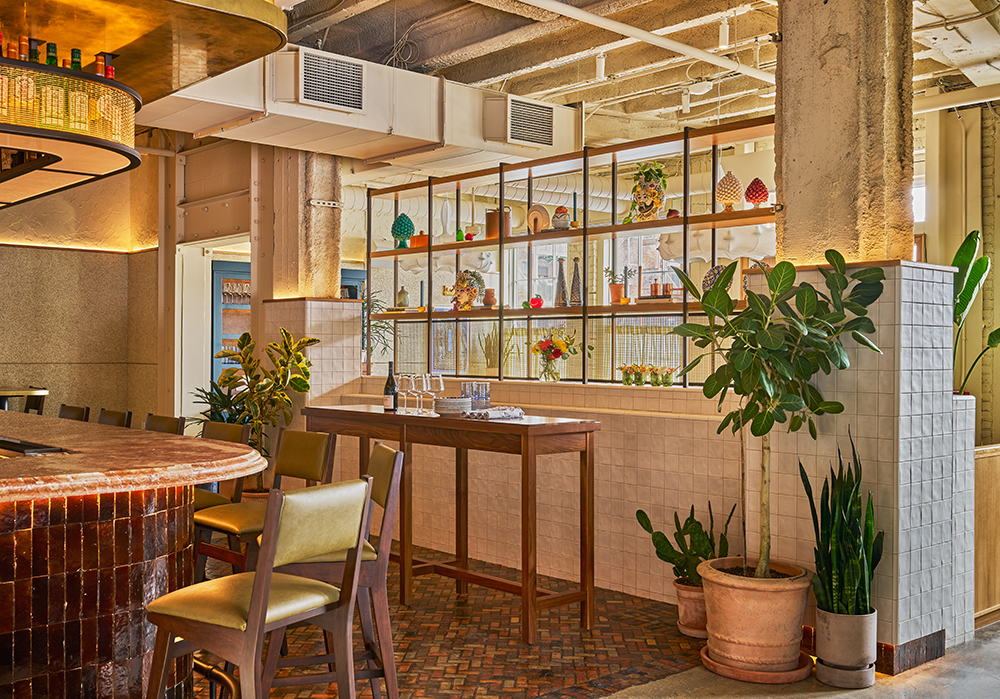
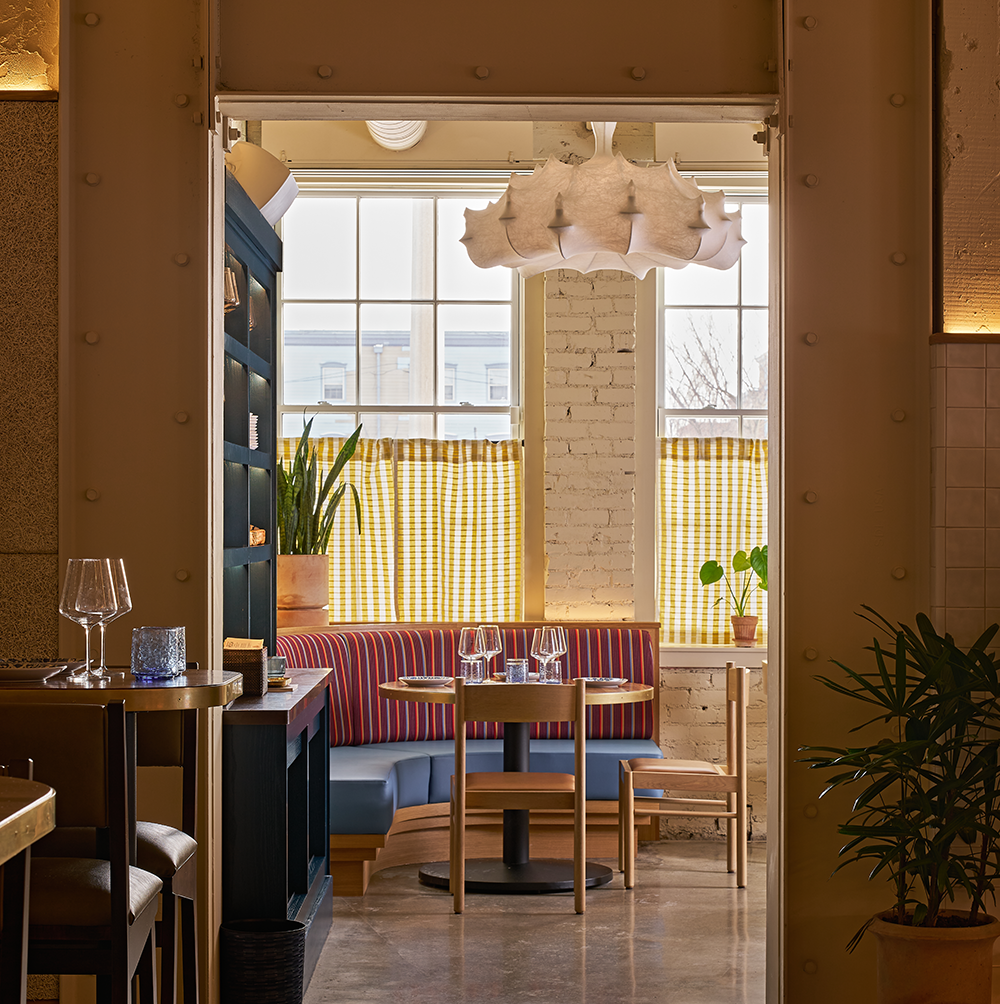
When Medusa opened in January, all of my expectations were completely surpassed — from the menu that includes streetside favorites like Panelle (crispy chickpea fritters popular in Sicily’s capital city, Palermo) and Arancini (balls of fried saffron rice with peas and tomato sauce) to the interiors, full of authentic, artisanal accents like hand-embroidered linens and sun-drenched hues that perfectly capture the island’s essence. I was instantly transported, thanks to the collaborative efforts of Lombardo and Patrick Thompson Design, which was brought on to transform the 8,000-square-foot restaurant (which also includes a discreet, private gathering room inspired by the Sicilian legend of Colapesce) into a dining experience that would send guests on an immersive journey through the region’s layered heritage.
I recently caught up with the firm’s founder, Patrick Thompson, to discuss what went into this incredible project.
Detroit Design: What were the initial goals for Medusa?
Patrick Thompson: When Anthony Lombardo first approached us about Medusa, he was clear that education would be central to the customer experience. He wanted the space to spark conversation by creating design moments that staff could use to engage guests and share the story of Sicily. The restaurant was envisioned as a lighter, brighter, and more colorful counterpart to SheWolf, with an emphasis on openness and energy. The overarching goal was to capture the feeling of being in Sicily — open, airy, vibrant, and full of life.
DD: What exactly about Sicily and its culture inspired the design?
PT: As the largest island in the Mediterranean, Sicily is defined by its climate, its agricultural richness, and the volatility of its three volcanoes. Its cuisine reflects a long, layered history shaped by successive cultures and rulers, resulting in a complex and varied identity. We wanted that same sense of richness and contrast to be expressed spatially. The artwork draws from the textures, colors, and frescoes found throughout Sicilian streetscapes, and reinforces that layered narrative.

DD: I’d love to discuss all the colors, textures, and materials that were used. Can you elaborate on these design choices?
PT: Many of Sicily’s buildings were constructed of locally-sourced limestone and sandstone, so we wrapped the space in a warm, hand-troweled plaster that reflects how those materials glow in sunlight. Light itself became a key design element, as the space requires flexibility to shift throughout the day and across different dining experiences.
We were also inspired by the way Sicilian streets incorporate fragments of tile. In lieu of installing new flooring, we embraced the imperfections, filling gaps and transitions with a mix of Italian tiles, each hand-selected by Anthony and lead designer Jennifer Bueso. These were arranged on-site, to ensure an organic, found quality. Throughout, we prioritized handmade materials, allowing the existing mosaic brick floor at the entry and bar to guide the scale and palette of the rest of the space. All of the millwork was done by BJ Construction.

DD: There seems to be quite a bit of custom work and local art crafted for the restaurant. Can you discuss each?
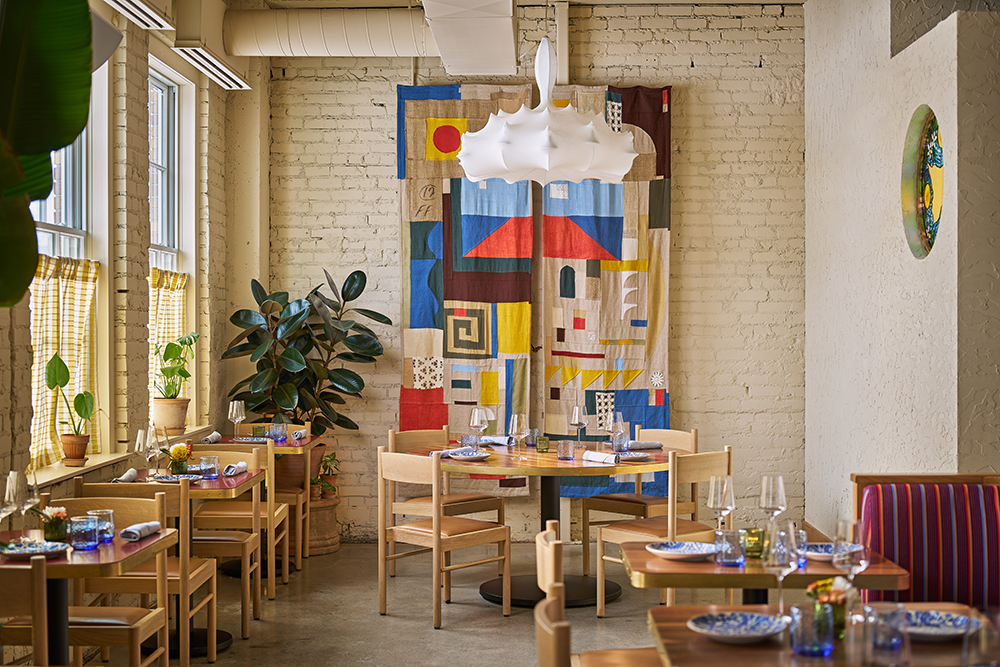
PT: We provided each artist with a clear conceptual framework, then invited them to interpret it through their own lens. That collaboration allowed the work to feel both cohesive and deeply personal. Art is always central to our process, and given Anthony’s goal of creating an educational experience, engaging Detroit-based artists was a natural extension. Jason REVOK’s screen prints were an early reference point, and Don Kilpatrick’s mural (opposite page) became a focal anchor within the space. These works balance the building’s industrial character with a more refined, narrative-driven quality.
Sicilian Moor heads appear throughout in varying styles, some referencing kintsugi and the materiality of the tile installations. Ellen Rutt’s textile piece (above) is a particularly meaningful moment; its vibrant composition evokes both the colors of Sicily and a landscape of rooftops meeting the horizon line of the sea.
DD: You’ve stated that Medusa was a true love letter to Sicily. What do you hope guests will feel when dining there?
PT: The goal is for guests to feel transported — to experience a sense of discovery, warmth, and connection. Whether through the materials, the artwork, or the atmosphere, the space is meant to evoke the richness of Sicilian culture while remaining grounded in Detroit.
MORE INFORMATION:
patrickthompsondesign.com
medusa-detroit.com
|
|
|


